Grim Reaper Medical SVG: Edgy, Clever, and Embroidery-Ready?
As a designer who’s stitched over 200 custom embroidery projects — from boutique aprons to medical staff holiday sweatshirts — I opened Grim Reaper Medical SVG expecting either a gimmick or a gem. What I found was something more useful: a tightly composed, conceptually sharp design that lands somewhere between dark humor and professional wit. It’s not just a skull with a stethoscope — it’s a visual wink for healthcare workers, students, and anyone who appreciates gallows humor with clean lines.
First Impressions: Mood, Shape, and Stitching Potential
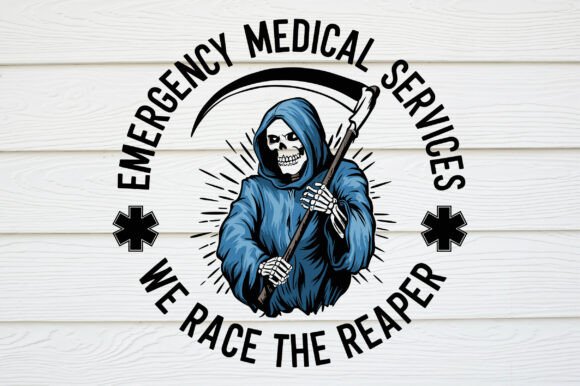
The Grim Reaper Medical SVG balances contrast and clarity beautifully. The central skull integrates subtle medical motifs — a crossbones-stethoscope hybrid, clean negative space around the jawline, and minimal but intentional linework in the eye sockets. There’s no excessive ornamentation, which is critical: this isn’t a decorative monogram or floral motif. It’s a statement piece meant to read at a glance, even on a moving tote bag or a coffee-stained lab coat.
I immediately pictured it embroidered on a heavyweight cotton twill tote for a local med school grad fair — sturdy fabric, medium hoop size (5” x 7”), black thread on charcoal gray. That pairing would let the shape hold its authority without bleeding or distortion. The design’s moderate width-to-height ratio also means it scales well across products: large enough for visibility on a pillow cover, compact enough to anchor a baby onesie (yes — I’ve done edgy-but-tasteful nursery embroidery before, and context matters).
Where It Shines — and Where It Needs Care
Grim Reaper Medical SVG works best where tone and texture align: custom apparel for healthcare professionals, embroidered patches for scrubs, holiday-themed tea towels for nurses’ gift baskets, or limited-run sweatshirt designs for craft fairs. Its dry, intelligent edge resonates with buyers who reject cliché — especially Etsy sellers curating niche handmade product lines around “medical humor” or “science-inspired gifts.”
That said, real-world embroidery demands realism. Here’s where attention pays off:
- Small hoop sizes: Avoid cramming this into a 3” x 3” hoop — the stethoscope detail and skull contours need breathing room. If you’re stitching caps or curved surfaces, test placement first; the top curve of the skull can distort if hooped too tightly.
- Fabric texture & stretch: On thin jersey or highly textured terry cloth, the fine interior lines may blur. Use cutaway stabilizer underneath and consider simplifying tiny elements (like the stethoscope earpieces) if digitizing for dense fill stitch.
- Dark or layered garments: This design relies on silhouette strength. On black fabric, white or metallic thread adds punch — but avoid light gray thread; it disappears. For reversible items like aprons, confirm thread color consistency on both sides.
- Wash durability: As a machine embroidery design, its longevity depends less on the file and more on execution. Dense satin stitch around the skull outline helps lock shape, but running stitch accents (if added manually) should be minimized on high-wear areas like pocket corners.
Commercial Use: Trust, Value, and Brand Fit
For Etsy sellers and small shop owners, Grim Reaper Medical SVG isn’t just another graphics download — it’s a conversation starter. Customers who buy embroidered medical-themed goods often seek authenticity and insider resonance. A well-executed version on a premium sweatshirt signals craftsmanship, not clipart. That builds trust faster than generic “nurse life” slogans.
But here’s what shifts perception: how cleanly it stitches. A poorly stabilized run on a lightweight baby blanket? The skull looks soft, vague — undermining the very boldness it promises. A crisp, balanced version on a structured canvas tote? Suddenly it’s collectible. That difference directly affects perceived value, repeat purchases, and social proof (i.e., customers tagging your shop in Instagram posts).
It also reinforces brand consistency. If your craft business centers on witty, adult-oriented handmade product lines — think holiday embroidery kits, “We Race the Reaper” mug wraps, or embroidered patches for conference swag — this design fits seamlessly. It doesn’t shout; it leans in.
Practical Designer Notes Before You Stitch
Before loading Grim Reaper Medical SVG into your embroidery software or sending it to production:
- Test on scrap fabric matching your final substrate — especially if using textured, stretchy, or dark material.
- Check thread color contrast in both natural and artificial light. A warm black thread reads differently than cool black on heather gray.
- Review stitch density: too sparse = fragile edges; too dense = puckering on lightweight fabrics. Adjust fill stitch angle if needed for smoother flow across curves.
- Confirm hoop size compatibility — don’t assume it fits your smallest hoop without measuring bounding box dimensions.
- Inspect small details: the stethoscope tubing, eye socket breaks, and jawline taper all need legibility at your intended size.
- Preview in black-and-white mockups. Does the shape retain impact without color cues? It should.
- Compare performance on light vs. dark backgrounds — crucial for digital embroidery file previews and printable mockups.
- Use appropriate stabilizer: cutaway for knits, tear-away for stable wovens, fusible for lightweight linens.
- Verify licensing terms — especially if selling finished embroidered items or bundling the design as part of a craft business toolkit.
This isn’t just a Graphics file — it’s a design asset with personality and purpose. Used thoughtfully, Grim Reaper Medical SVG elevates everything from a single personalized gift to an entire seasonal collection in your Crafts shop. But like any strong voice, it only lands when the execution matches the intent.
So go ahead — stitch it boldly. Just make sure the thread’s tight, the stabilizer’s right, and the context feels true.