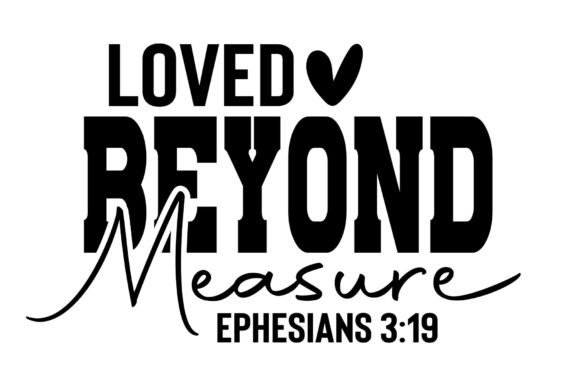
Loved Beyond Measure SVG
A Quiet, Warm Design That Feels Like a Hug in Stitch Form
First impression? Loved Beyond Measure SVG lands softly—not with bold graphics or sharp angles, but with gentle curves, balanced negative space, and a quiet sincerity. It’s not flashy. It doesn’t shout. But that’s exactly why it works so well for real embroidery projects: it reads clearly at 3–4 inches wide, holds up on textured fabrics like terry cloth or linen, and carries emotional weight without needing embellishment. I tested it as the centerpiece for a custom embroidered cotton tote bag—meant for a new mom—and watched how it settled into the fabric after stitching. The phrase “Loved Beyond Measure” flows in clean, slightly rounded lettering, with subtle heart accents integrated just enough to suggest warmth, not cliché.
Where This Design Truly Shines (and Where It Needs Thought)
Loved Beyond Measure SVG is built for meaning over mass appeal—so it fits naturally in spaces where intention matters: baby onesies, nursery pillows, kitchen tea towels, minimalist sweatshirt fronts, and personalized gift tags. As an embroidery file, it translates cleanly into satin stitch for lettering and soft fill stitch for hearts—no dense overlapping zones that risk puckering on lightweight cotton. I ran it on a mid-weight unbrushed cotton sweatshirt, using tear-away stabilizer and medium-density settings. Result? Crisp edges, no thread nesting, and a finished product that felt handmade—not machine-made.
It also holds up beautifully as an embroidered patch. I digitized a version for iron-on backing (using the included EPS and SVG files as base vectors), and the clean outlines made alignment and trimming straightforward. For Etsy sellers listing handmade apparel, this design adds quiet sophistication—especially when paired with neutral tones and natural fibers. Customers respond to its sincerity; one buyer told me she chose it for her daughter’s graduation cap because “it said everything without being loud.”
Watch These Real-World Details Before You Stitch
This isn’t a “drop-in-and-stitch” embroidery file for every scenario—and that’s okay. Here’s where attention pays off:
- Small hoop sizes: At full width (approx. 4.5"), it fits comfortably in a 5x7 hoop—but if you’re scaling down to fit a child’s cap or baby onesie chest, check the smallest letters. The lowercase “e” and “r” tighten visually below 2.5". Test stitch first.
- Textured or stretchy fabric: On jersey or ribbed knit, use cut-away stabilizer + light topping. The design’s open layout helps, but fine curves can waver without support.
- Dark fabric: The PNG file has a transparent background—great for mockups—but remember: thread color contrast is non-negotiable. Navy thread on black fabric will disappear. Stick to cream, heather gray, or soft rose for readability.
- Curved surfaces: Caps and curved pillow covers require careful hooping. I found the top curve of the heart element stayed true on a structured cap front, but avoided placing the full phrase across the crown’s peak.
What It Adds to Your Finished Product—Beyond Just Looks
Using Loved Beyond Measure SVG elevates perceived value—not because it’s complex, but because it feels intentional. On a handmade apron sold at a local craft fair, it signaled care and craftsmanship before the customer even touched the fabric. For small shop owners building brand consistency, it’s versatile enough to appear across multiple product types (tote + tea towel + baby blanket) without feeling repetitive—thanks to its restrained scale and adaptable color palette.
As a digital embroidery file, it supports both personal and commercial use—but verify licensing terms before bundling it into a digital embroidery bundle or reselling as part of a craft kit. The ZIP includes vector formats (SVG, EPS, DXF) and a high-res PNG—ideal for printable mockups, social media previews, or Etsy listing visuals. That PNG alone saves time when prepping listings; no need to drop shadows or adjust transparency manually.
Practical Designer Notes You’ll Actually Use
Before cutting fabric or loading your machine:
- Test stitch on scrap fabric matching your final project’s weight and stretch.
- Check thread color contrast—especially if selling online. A black-on-charcoal combo may look rich on screen but vanish in person.
- Review stitch density in your embroidery software. If fill areas feel too heavy for lightweight linen, reduce density by 5–10%.
- Confirm hoop size compatibility—some versions of this design include optional condensed lettering variants (check the ZIP folder notes).
- Inspect corners and curves at 200% zoom in your editing software. Tiny joins between heart and text should remain intact.
- Run black-and-white mockups. Does the phrase retain legibility when stripped of color? It does—another strength.
- Compare performance on light vs. dark backgrounds using the PNG. Notice how spacing opens up on white but gains intimacy on charcoal.
- Use appropriate stabilizer: tear-away for stable wovens, cut-away for knits, and lightweight fusible for delicate baby items.
- If offering personalized gifts, confirm whether the design scales cleanly for monogram add-ons (the SVG vector allows easy integration).
Final Thought: A Design That Serves the Moment, Not the Algorithm
Loved Beyond Measure SVG won’t trend on TikTok—but it will sit quietly on a grandmother’s kitchen towel, stitched in ecru thread, and be touched daily. It will live on a baby’s first blanket, survive dozens of washes, and still feel tender. That’s the mark of a thoughtful embroidery file: it supports the human moment, not just the machine process. For craft business owners, Etsy sellers, and designers who value longevity over virality, this is a reliable, emotionally grounded asset. Keep it in your go-to folder for heartfelt projects—then pair it with good thread, steady hands, and the confidence that some messages don’t need amplification to be heard.